Data analysis
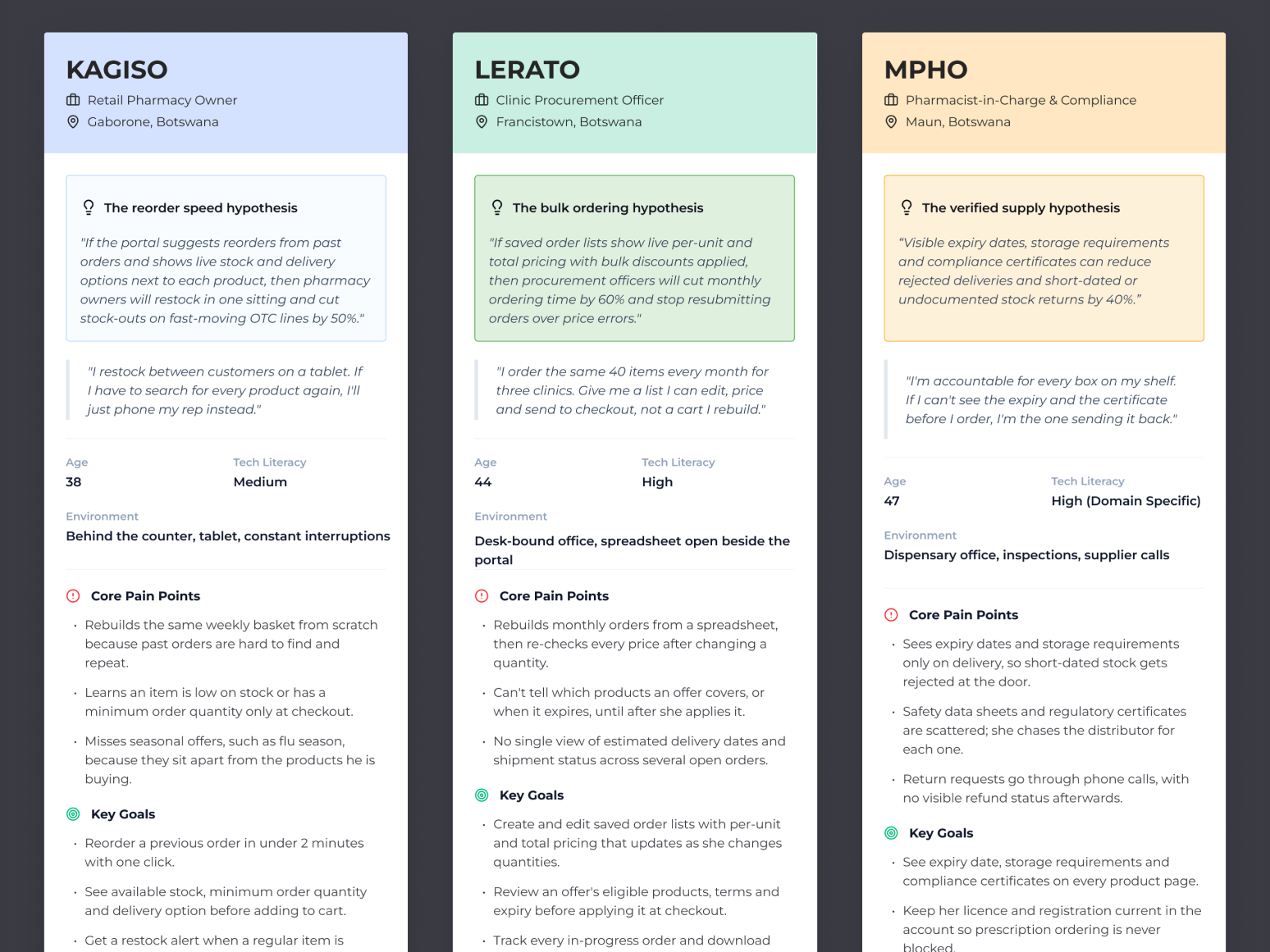
Examined and evaluated the performance of the existing designs and analyzed the types of users who placed orders with us.
A digital sales solution enhancing online ordering, order management, and customer experience while supporting and expanding sales channels.
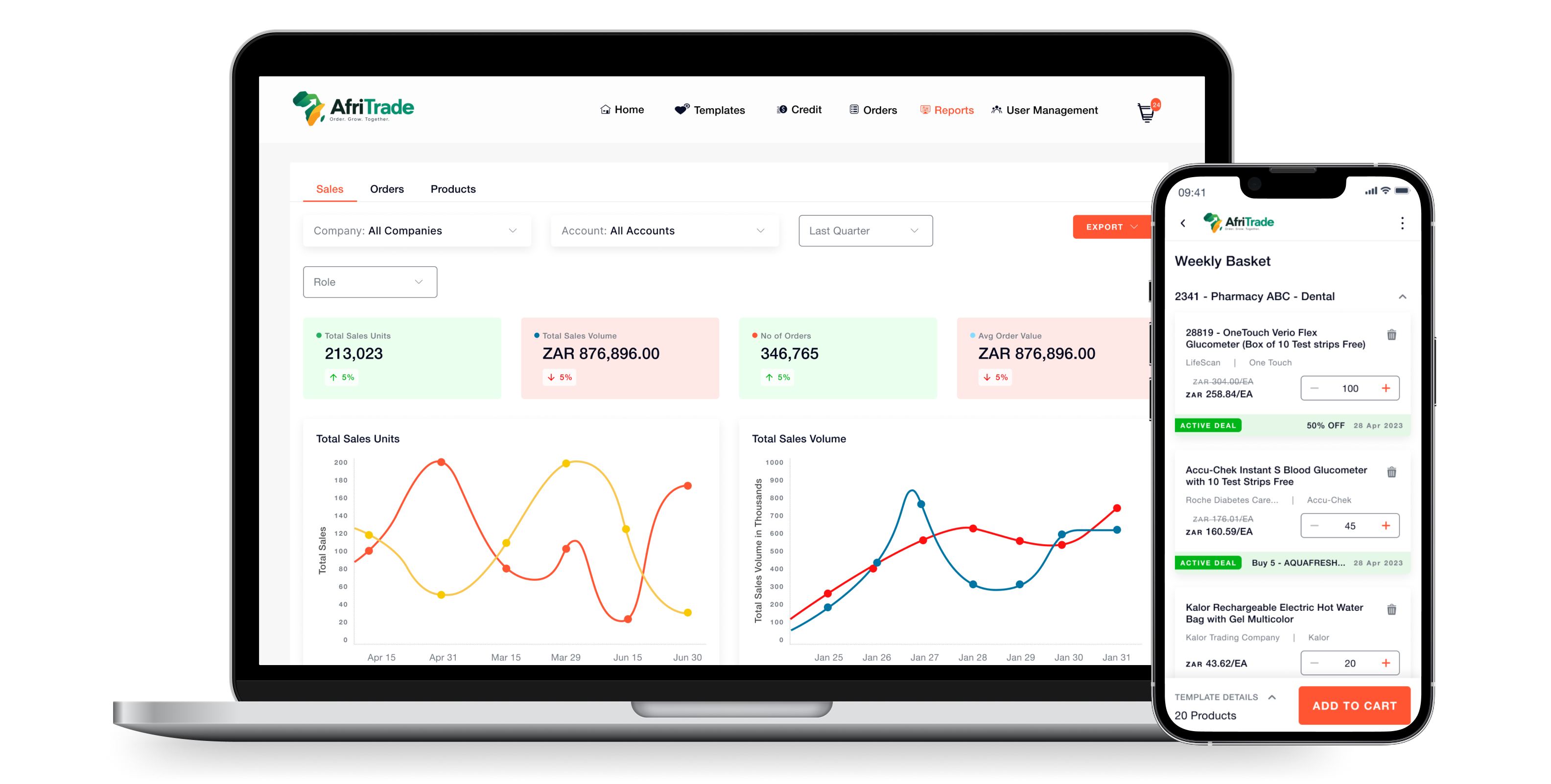
A business need was identified in the Sub-Saharan Africa Market Access to enhance digital interactions with third-party stakeholders, including customers, clients, and principals.
Without existing insights, I was in uncharted territory, unsure of the product's direction. That's when I decided to plan a research exercise to understand users' workflows, challenges, and expectations. Identifying the right people and asking the right questions is key to gaining real insights.
“Why is this product at the edge of going down?”
Examined and evaluated the performance of the existing designs and analyzed the types of users who placed orders with us.
Interviewed a group of 10–15 real users, along with product managers, business owners, and analysts, to identify improvement areas.
Focused on redesigning UX, visual elements, and structural hierarchy to provide a more intuitive and familiar experience for our users.
Redesigning a product for the Sub-Saharan Africa market meant catering to user needs, ensuring scalability, and supporting various Market Access services. Tight timelines and legacy app issues added complexity. Beyond visual updates, the aim was a seamless user experience that met regional and business needs.
Aligning the current e-commerce design system and addressing UX gaps.
The project lacked clear IA, relying on ad hoc adjustments driven by the current ERP solution.
Due to tight timelines, the project prioritized timely design delivery over scalability.
Conducted a UX audit to align with our e-commerce design system, optimized product listing, and completed checkout behavior for a better user experience.
Developed a scalable solution for seamless transitions between desktop and mobile designs, integrating varied data sets across business units effectively.
Established alignment between business units, product, and tech team in planning walkthroughs and weekly meetings to integrate a seamless user experience.
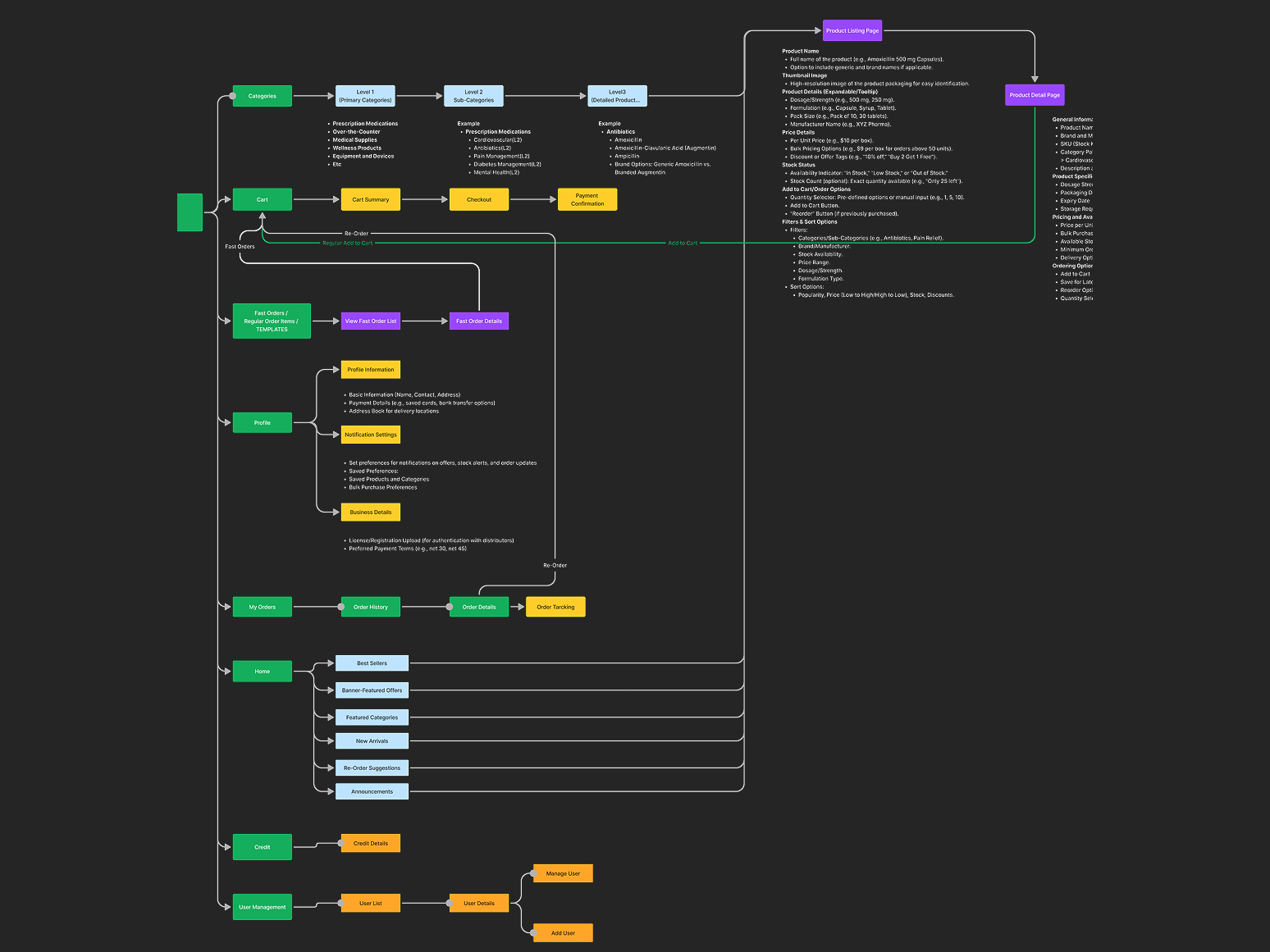
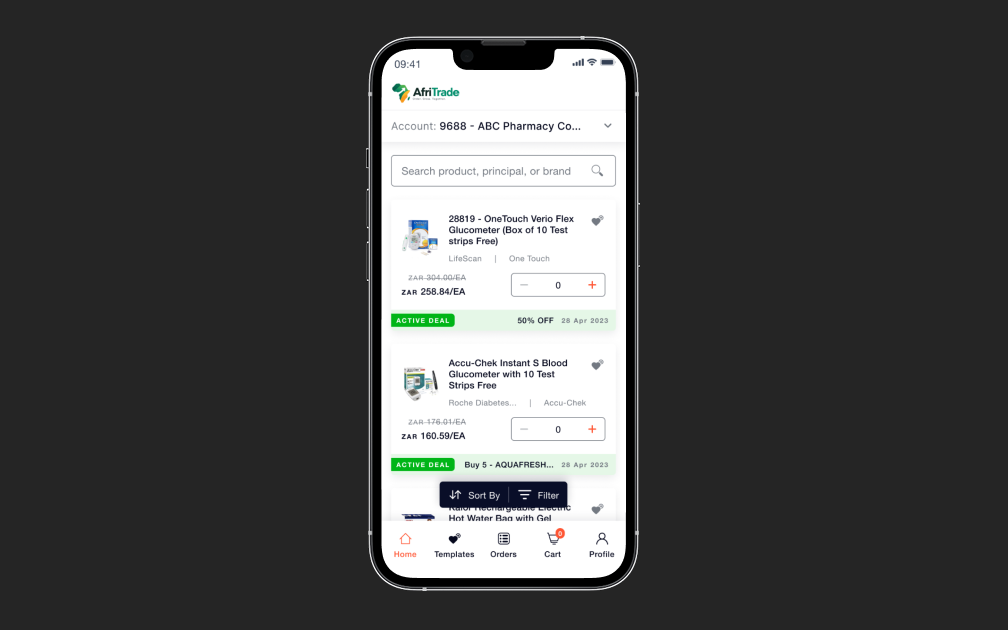
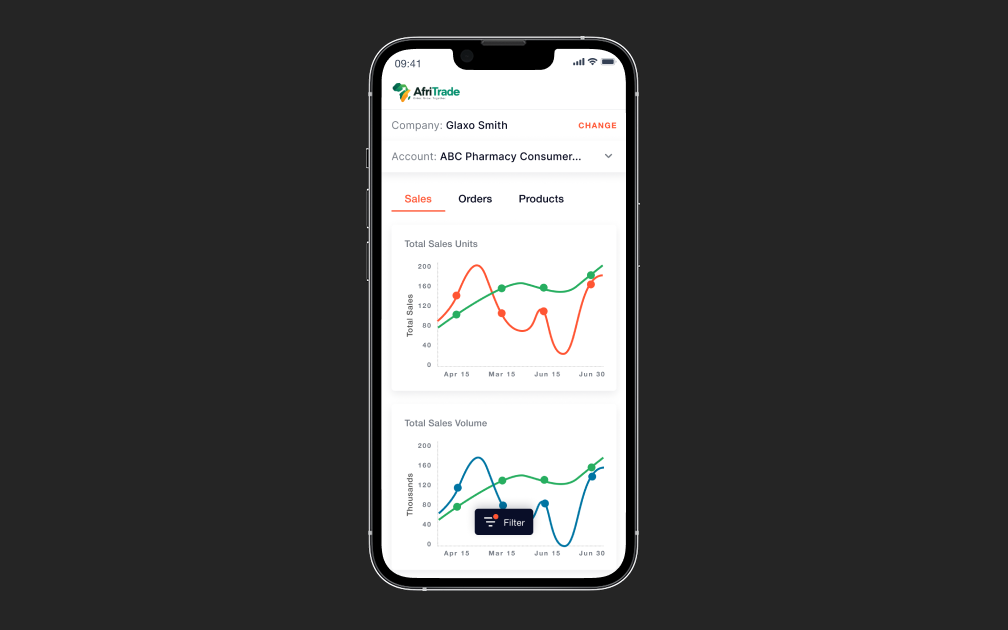
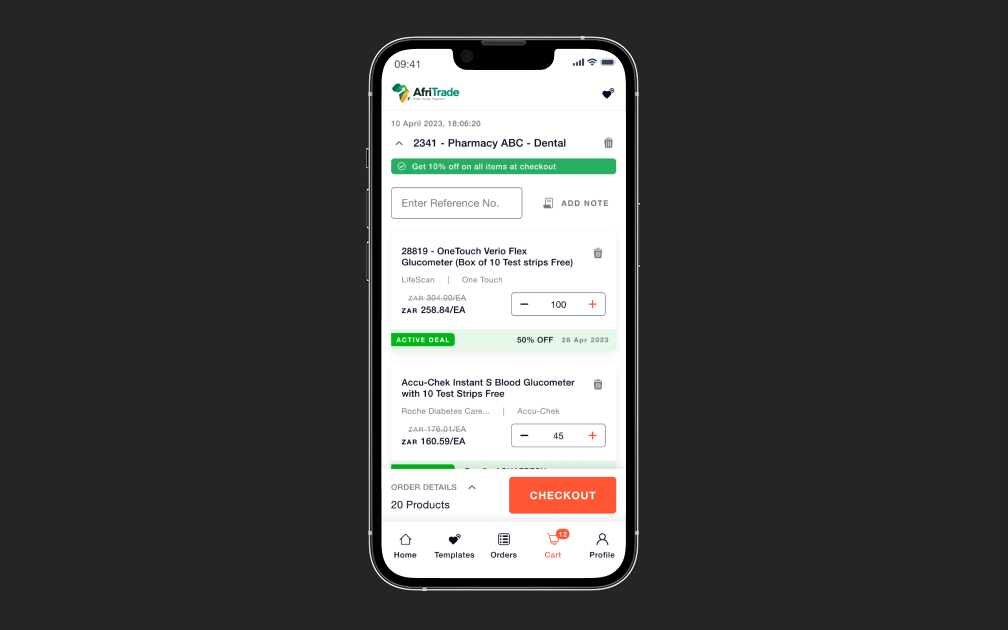
To reduce drop-off rates and increase product discoverability while minimizing clicks.
The previous app design was hard to scale due to accumulated UX and tech debt.
Design wasn't optimized for small screens in the SSA region, leading to information loss and scalability issues.
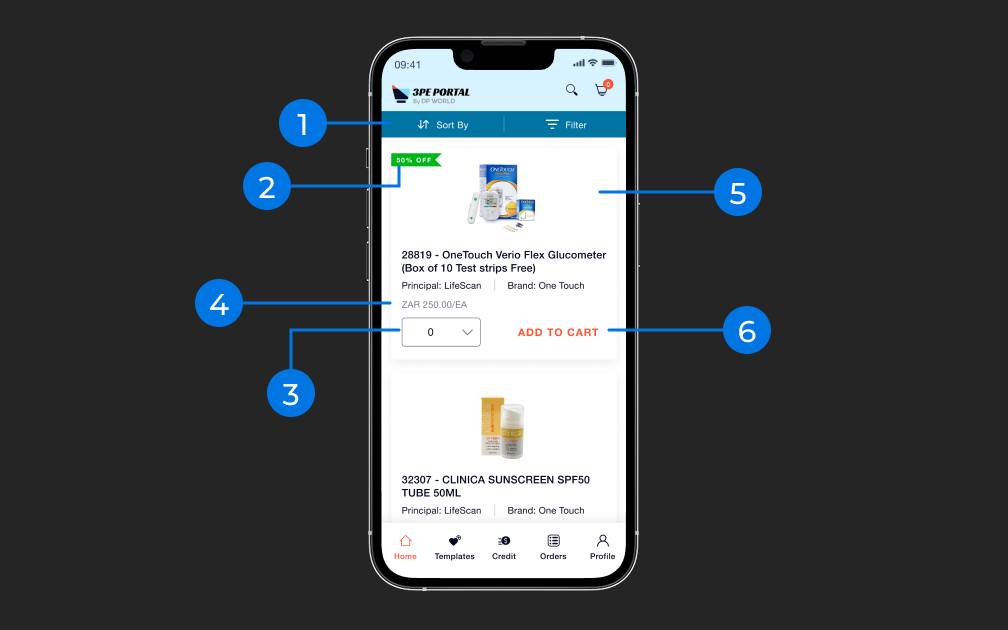
Inefficient space in listing led to clutter, with 45% of users abandoning searches if they were not able to find items within 30 seconds.
In terms of design principles, I had to rethink three points:
Scalable and stable design structure.
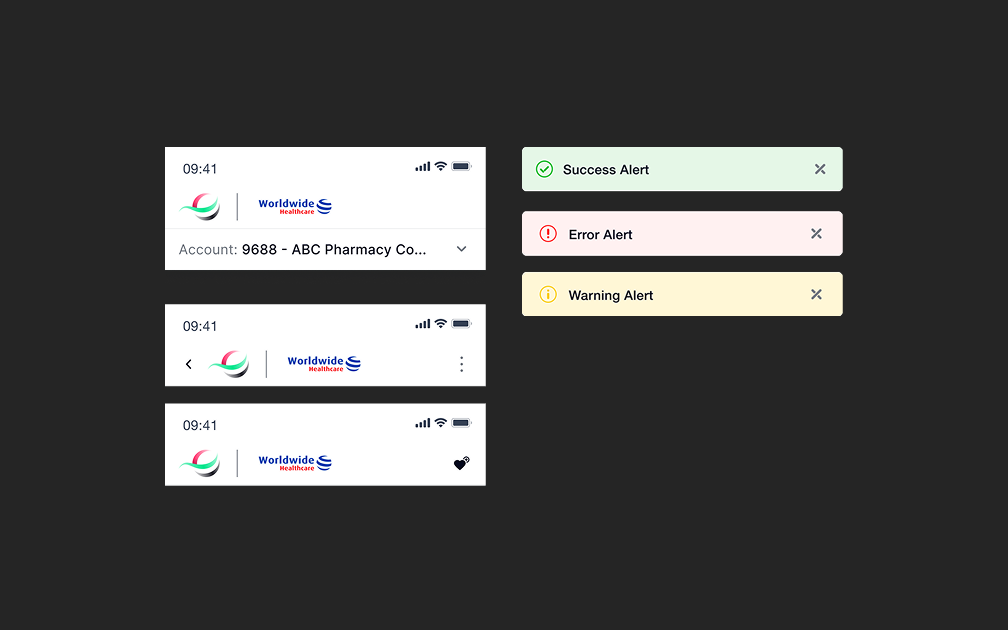
Modularised components that can fulfill any scenario and service type.
Consistent structure across different service types.
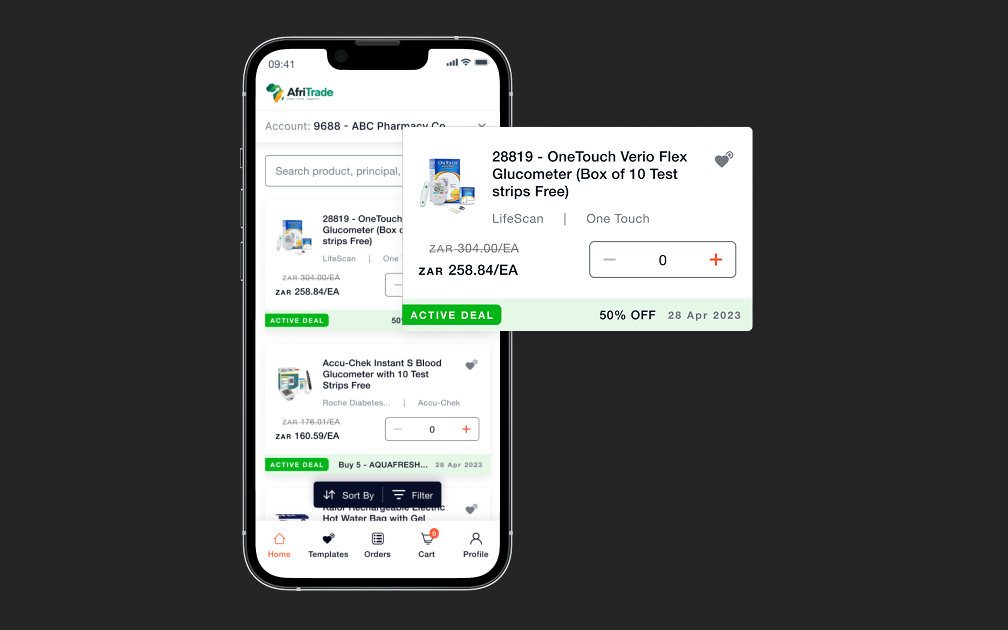
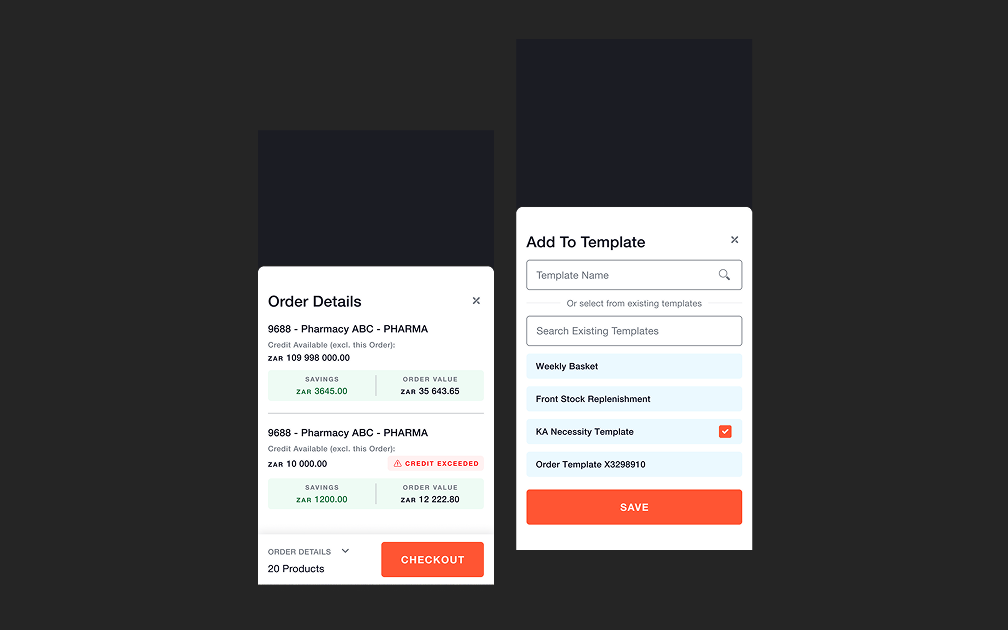
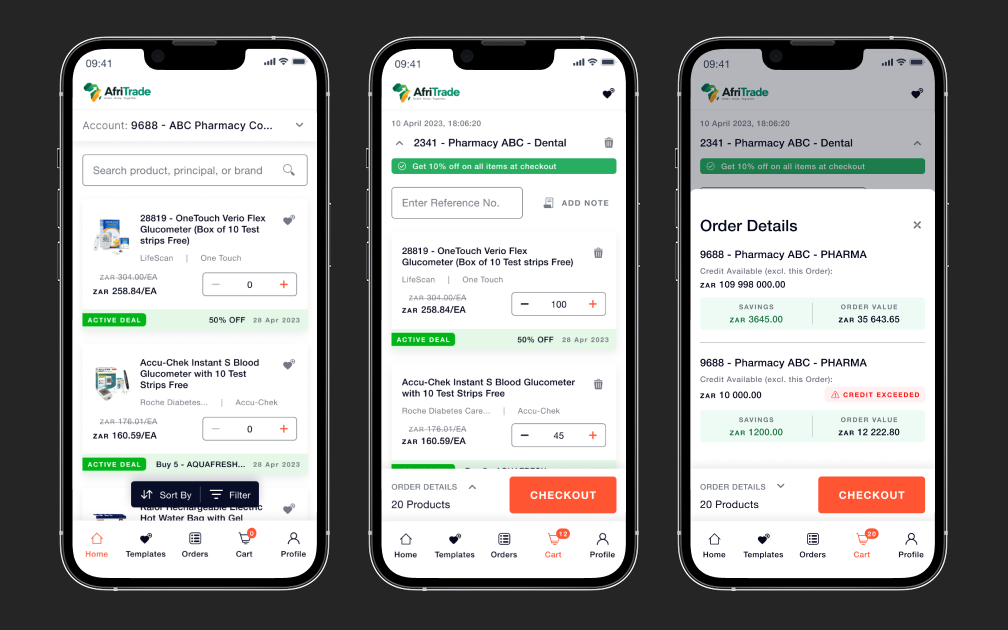
Added a standalone Add To Cart CTA, which increased scalability for the future, reduced the difficulty of use and reduced drop-off rate.
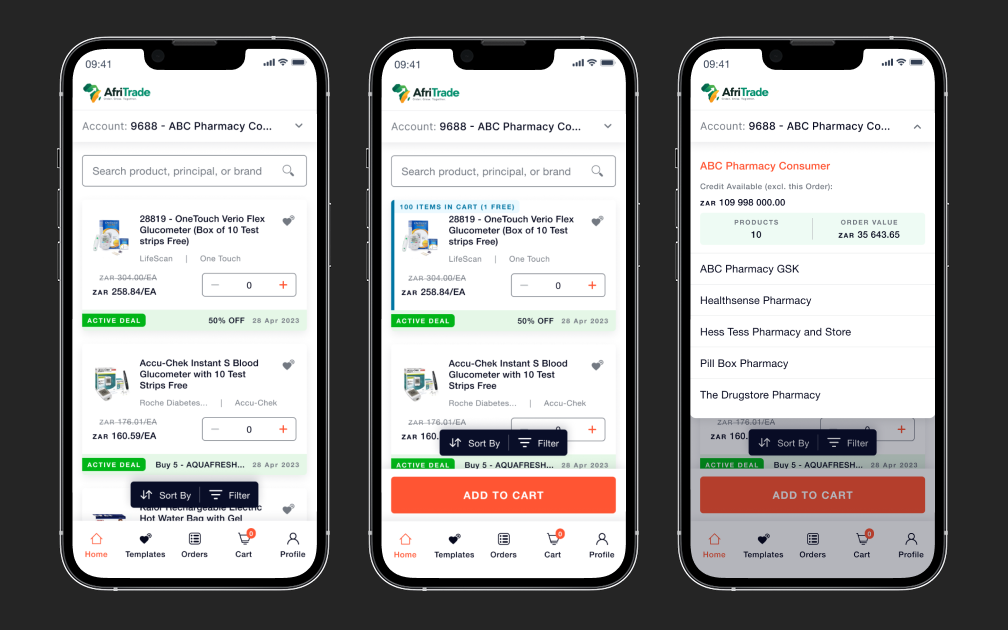
Selected account and added products sit close to each other. Users were happy to view the information upfront and switch account at any given time.
25% of GMV will flow through AfriTrade Portal ordering by 30 June '26.
AfriTrade Portal adoption for May stands at 29% (highest ever).
Understanding both data and user inputs is crucial for making informed design decisions.
Simplify design and communication to build brand trust effectively.
Focusing on small, overlooked details with potential for significant positive impact on both business and user.